PR Pros, Listen Up: How to Actually Engage the Hispanic/Latino Market
September 24, 2025
By Gisselle Garcia
It’s National Hispanic Heritage Month, and if you work in PR, you know what that means: brands scrambling to post a “We ❤️ Hispanics!” graphic on Instagram. Some nail it. Most do not. (We see you, generic taco memes.)
Here’s the truth: treating the Hispanic/Latino audience as an afterthought is like showing up to Coachella in Crocs. You might be there, but nobody is impressed.
The Numbers and Influence Are Huge
Hispanics make up nearly 20 percent of the U.S. population, about 63.6 million people as of 2022. Their purchasing power? Exploding. According to the annual U.S. Latino GDP Report, Latino GDP hit $4.1 trillion, which would make it the fifth-largest economy in the world if it were a country.
Between 2020 and 2040, Hispanics are projected to account for 70 percent of net new homeowners in the U.S., according to a study by the Urban Institute. This surge is driven by a younger, growing population entering prime homebuying years, making them a key demographic for campaigns targeting the housing market and beyond.
And it’s not just about money. The cultural influence of this market is equally impressive. Take Puerto Rican rapper Bad Bunny’s recent residency: more than 600,000 visitors attended during off-season, generating an estimated $200 million for the island. Fans came from all backgrounds, showing that Hispanic influencers are crossing cultural and demographic barriers. That’s not just fans singing along – it’s an entire market flexing its economic and cultural muscle.
Ignoring this audience isn’t just a missed marketing opportunity. It’s leaving both dollars and influence on the table.
Generations Matter
Hispanics in the U.S. span multiple generations – Gen X, Millennials, Gen Z and beyond. Like their peers in the general population, they think, shop and engage differently depending on their generation.
If you think generational differences are wide in the general population, imagine how much they expand in minority communities, where immigration history, cultural retention and bilingualism add extra layers. Your messaging and campaigns cannot be one-size-fits-all.
What You Really Need to Know
So how do you avoid being “that brand” that tries but fails? Here’s a foundational, basic cheat sheet:
1. Hispanic ≠ Latino ≠ Mexican
Not everyone is Mexican (though I am, and proud!). And Hispanic and Latino are not the same thing, though they often overlap. That’s why you’ll see them lumped together.
Hispanic generally refers to people from Spanish-speaking countries, including Spain, Mexico, much of Central and South America and parts of the Caribbean. The focus is on language.
Latino/Latina/Latine refers to people from Latin America, including countries in Central and South America and the Caribbean but not Spain. The focus here is more on geography than language.
A person from Brazil, where Portuguese is spoken, is Latino but not Hispanic. Someone from Spain is Hispanic but not Latino.
For this post – and often in marketing or research – you’ll see “Hispanic/Latino” used as a single label. That’s because the groups frequently overlap, share cultural touchpoints and face similar challenges in the U.S. But overlap does not mean identical. Each community is rich, diverse and should be understood in its own terms.
Hispanics and Latinos hail from dozens of countries with different races, religions and cultural traditions. From the streets of Mexico City to the festivals of Colombia, the music of Cuba and the cuisine of Puerto Rico, one approach does not fit all. Knowing these distinctions – and the nuances of each community – is key to campaigns that actually resonate.
2. Language matters
Not everyone loves “Latinx.” Many prefer Latine or Hispanic depending on cultural and generational context. These are not just interchangeable terms. They carry meaning, identity and respect. Using the wrong one can make your messaging feel out of touch or even alienating.For a deeper dive into the nuances between Latino, Latinx, Latine and Hispanic, check out this Axios explainer.
3. Family is everything
Think multigenerational households, first-time homebuyers teaming up with relatives and kids translating the news for parents. Women often run the show at home, even in communities where machismo still exists. Ignore family dynamics and you are missing half the audience.
4. Context is King
A friend opened a clinic in a Hispanic neighborhood.
- Spanish-speaking spokesperson? Check.
- Media outreach? Check.
- Coverage? Crickets.
The lesson: do your homework before pitching or creating campaigns. PR pros should research the audience, local media outlets and current issues affecting the community.
This can include:
- Reviewing trending stories in local Hispanic media
- Understanding culturally relevant holidays, events and topics
- Speaking with community leaders or trusted influencers to gather insights
- Monitoring social media conversations and sentiment
Ignoring the research step can cause even well-intentioned campaigns to fall flat. Context and insight are everything.
PR Tips That Actually Work
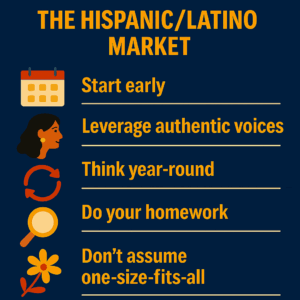
- Start early: Do not wait until the week of Hispanic Heritage Month to engage.
- Leverage authentic voices: Hispanic/Latino creators, journalists and influencers already have trust – tap into it.
- Think year-round: This audience is not seasonal. Your campaigns should not be either.
- Do your homework: Any campaign starts with research – this audience is no different. Check local media, trends, community priorities and social conversations before pitching or creating content.
- Don’t assume one-size-fits-all: Tailor messaging, visuals and channels for different countries of origin, generations and cultural practices.
Bottom Line
If your PR campaigns ignore the Hispanic/Latino audience, you are missing out big time. This group is not a side note. They are culturally influential, economically powerful and savvy. Treat them like the key audience they are and your campaigns will thank you. Ignore them and someone else will cash in while you are stuck wondering why your metrics look flat.