- Build Credibility & Influence
- Develop a Communications Strategy
- Increase Brand Awareness
- Tackle Tough Issues
- Taking Aim
How Established Nonprofits Can Reach New Audiences Without Losing the Old
August 27, 2025
By Curley & Pynn
Longevity is a powerful brand asset. Decades of impact signal credibility, trust and stability. Yet for many organizations, legacy can sometimes feel like a barrier to growth, especially when trying to connect with a new generation of donors.
At Curley & Pynn, we help mission-driven organizations stay true to their purpose while embracing what’s next. From launching a first fundraising campaign to marking a milestone 75th anniversary, every milestone in a nonprofit’s story is an opportunity to evolve. The key is doing so without losing sight of the “why” at the heart of its mission
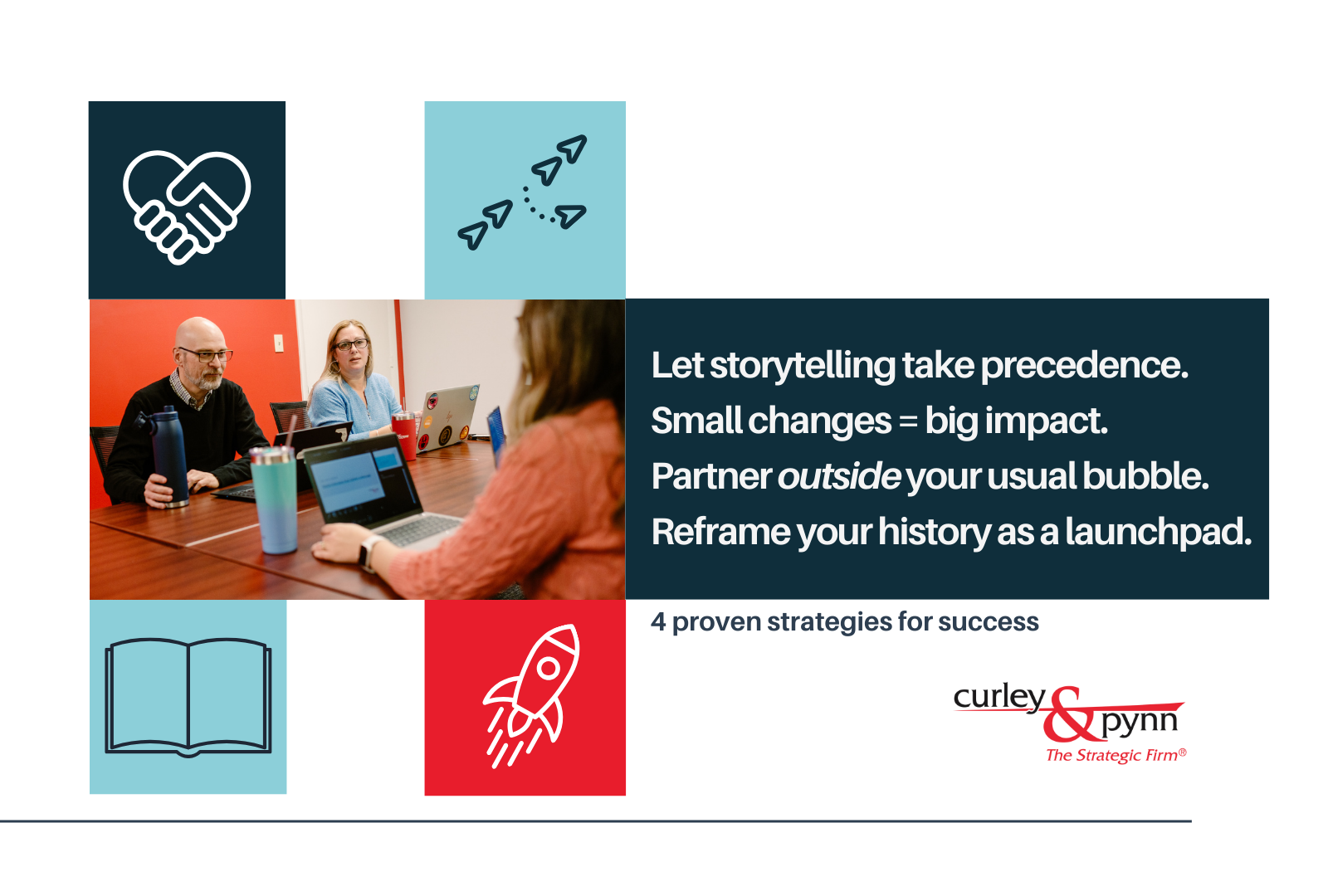
Here are four principles to consider as you work to reintroduce your organization to new audiences.
Let storytelling take precedence.
Stories are what capture hearts and inspire action. As my colleague, Rebecca Kleha, points out in her latest Taking Aim blog, for an audience to invest in your story, you need to think beyond company milestones or generic data points and craft narratives that inform, inspire or entertain. In donor relations, sharing impactful, narrative-driven stories helps both longtime and new supporters see the difference they are making. Every new story reinforces that your work matters and that your mission is as essential to your community now as it was when you first started.
Small changes = big impact.
Reaching new audiences can also mean rethinking how you communicate. Take an honest look at your public presence and ask yourself: “Are we showing up in the places and spaces that matter most to the people we want to reach?”
For example, if you’ve always hosted in-person workshops but attendance has dwindled, try a short webinar series during lunch hours instead. The same content in a different format can draw a whole new audience. Likewise, if you’ve built your reputation through traditional media stories but noticed these aren’t getting the same traction as they used to, consider pitching a podcast or working with a local influencer whose followers align with your target audience and mission.
These changes don’t overhaul your identity; they show that you’re paying attention and willing to meet your audience where they are.
Partner outside your usual bubble.
Partnerships have always been essential to nonprofit success, but expanding beyond the expected can lead to the most transformative collaborations.
A health nonprofit that joins forces with a local arts organization to create an awareness mural downtown or a higher-ed institution that teams up with a neighborhood coffee shop to host storytelling nights featuring student voices aren’t just creative one-offs but strategic alliances that can put your mission in front of new audiences, build intergenerational credibility and show your organization is in step with the broader community.
When nonprofits step beyond familiar territory, they not only put themselves in front of new audiences but signal relevance and credibility across generations.
Reframe your history as a launchpad, not a time capsule.
Your founding story is important, but it should not be your only story. Position your history as the credibility that strengthens your ability to address today’s issues. Frame your “why now?” around current needs and future aspirations. By showing that your past empowers your present, you assure both loyal supporters and new ones that your impact is far from finished.
For nonprofits, sustaining a legacy while reaching new audiences is less about reinvention and more about evolution. Audiences old and new respond to authenticity, clarity and momentum. By approaching growth as an extension of your legacy rather than a departure from it, you can strengthen connections across generations and ensure your mission continues to matter well into the future.