Donor Communication That Keeps Up With How Giving Is Evolving

March 4, 2026
By Rebecca Kleha
Donor emails don’t fall flat because your organization is not doing enough. They fall flat because the message doesn’t feel like it was written for a real person.
Most inboxes are crowded, attention is short and donors can spot a mass email in seconds. When a message feels generic, it gets treated like spam, even when the main message may resonate.
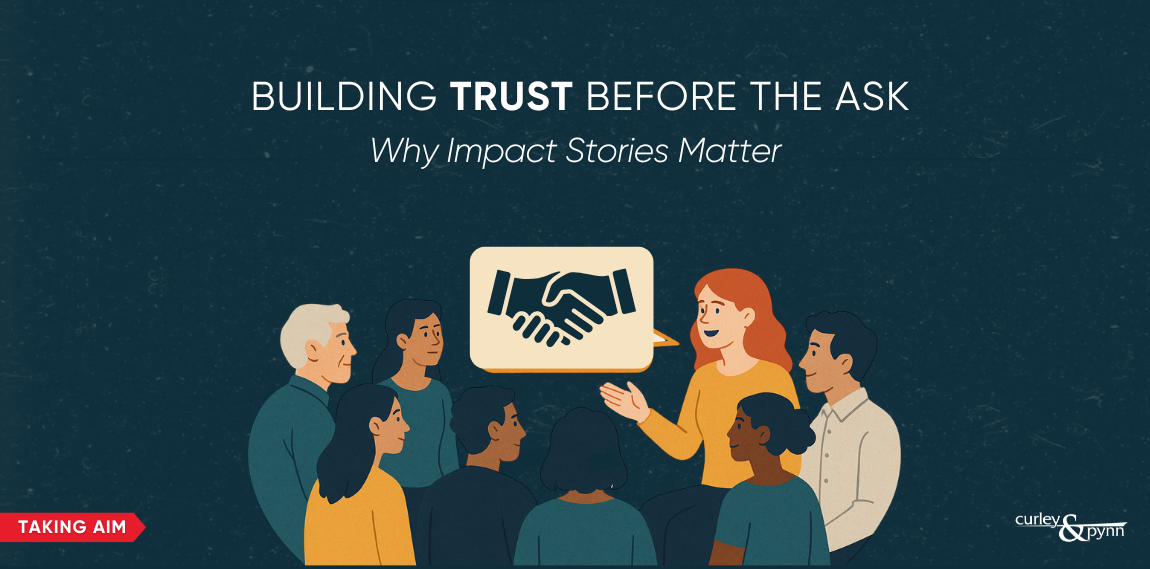
The goal of donor communications is not to send more appeals. It is to build trust, confidence and connection so that when you do ask, it feels like the natural next step in a relationship that’s already growing.
When making an ask in 2026, relationship-building matters even more. Volatility and disruption are expected, and communities are being pushed to solve more problems locally. Donors will pay attention to who feels steady, credible and clear about impact.
Make Every Email Do One Job
Here’s the simplest way to improve donor email fast: Give each email one clear purpose.
Before you start to write, decide what you want the donor to do next. Give. RSVP. Read a story. Watch a short video. Reply.
When an email asks for too many things at once, you are putting the burden on the reader to figure out what matters. Most people will not take the time or they’ll choose the easiest option, which often isn’t ideal Clarity is a form of respect. It tells donors, “I am going to make this easy.”
Stop Writing to Donors and Start Writing to ONE Donor
Not all donors give for the same reasons, and not all donors need the same message today.
- A first-time donor needs reassurance that their gift mattered and that you noticed them.
- A recurring donor needs proof that their consistency is producing results.
- A lapsed donor needs a reason to believe again, without being guilted into it.
- A donor who cares about a specific program wants to see that impact.
- A major gift prospect needs confidence, clarity and a sense that you have earned the right to ask bigger.
Segmentation does not have to be complicated. Start with what you already know: giving history, engagement level, program interest, event attendance, volunteer involvement and relationship stage.
Then write like you’re speaking to one real person inside that segment. What do they value? What would make them feel proud, seen and confident in the mission?
This is also where your communication catches up with how giving is changing.
According to the Central Florida Foundation, more than 50% of millennials incorporate charitable giving into their annual budgets, and family philanthropy is shifting, with Gen Alpha (under 14) influencing more than 80% of family giving decisions in 2025.
Simply put, the people shaping giving decisions are evolving, and your message has to feel relevant to them.
Lead With Impact, Belonging and Trust
Donors are human first. They do not engage because you listed program features. They engage because something in the story touched them, and they recognized themselves in the mission. Because the message helped them feel the meaning in a moment.
Data matters, but it works best as support, not the lead. One proof point can validate a story, but an email full of numbers usually will not.
At the same time, donors are becoming more intentional and impact driven. They are asking tougher questions about results, measurement and effectiveness. That is not a hurdle; it’s a signal that clarity and credibility are now part of the relationship.
If you want donor emails to land with their audience, focus on three things:
- Impact: Show the change, not just describe it. Let the donor picture the before and after.
- Belonging: Donors should feel like insiders, not outsiders. “Because you gave, this happened” lands differently than “we did this.”
- Trust: Trust is built through transparency and steadiness. Be clear about what gifts make possible and share progress. Be specific. Avoid overpromising. Credibility is often just clarity, delivered consistently.
Use a Simple Structure You Can Reuse
The best donor emails do not sound like marketing. They sound like a person showing up with something meaningful to share.
A simple structure helps.
- Start with a subject line that feels human and specific. Make a promise, not a pitch. Saying “A small win you made possible” or “I wanted you to see this” helps the reader feel connected.
- Open with a line that earns the next sentence. Include a vivid detail, a real moment or a question that feels honest.
- Tell one story: one person, one moment, one outcome. You do not have to write a novel; you just need to make the impact tangible.
- Connect the donor to the impact. Do not tack on the ask at the end like an afterthought. Make the bridge explicit so it feels natural.
Then make one clear next step easy to take.
If every email is an ask, donors learn to brace themselves. If your emails consistently deliver meaning, donors learn to open them. Aim for stewardship and impact updates to outnumber direct asks so your audience sees you as someone who wants to connect, not someone trying to make a transaction.
Donor emails are not just a fundraising tool; they are a trust-building tool.
When donors feel seen, when impact feels real and when your communication is clear and consistent, giving becomes easier. Not because you pressured someone, but because you reminded them why they cared in the first place.